
UPI and the Apps That Use It
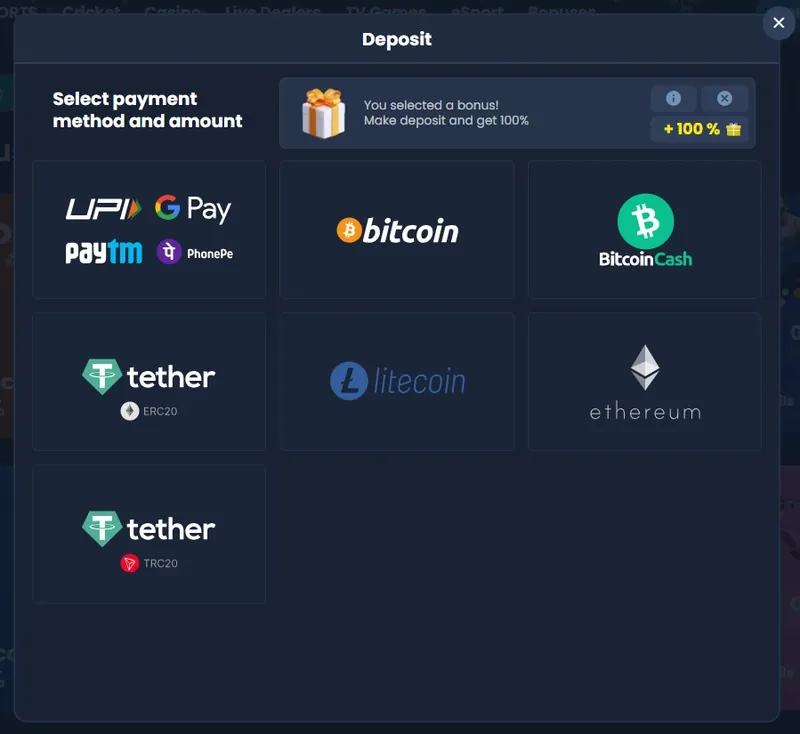
Participating bank accounts use UPI as the underlying payment system. Customers can access it through apps such as Google Pay and PhonePe. Paytm might refer to an app or to a particular service it offers. Without the underlying route, its logo is ambiguous. Labels for the UPI system and the apps that use it do not automatically identify separate ways to fund an account.
To review a completed or pending payment, use the full receipt. The transaction ID, parties and bank status tell you more than the logo. A screenshot marking a bank transfer as successful records what the app reported, but cannot show whether the recipient credited the gaming balance.
Reading the Payment Options Shown in an Advert
| Option | What to Verify | Assumption to Avoid |
|---|---|---|
| UPI | Bank status, payee and transaction ID | Each app represents a different UPI payment route |
| Bank transfer | Bank details, transfer method and reference | Different bank systems settle at the same speed |
| Visa / Mastercard | Currency, billed amount and limits set by the issuer | The card issuer will accept any payment if its logo appears |
| E-wallet | The precise wallet service, fees and who owns the account | A wallet used for deposits always works for withdrawal |
| Cryptocurrency | Network, asset, costs and TxID | A token can be sent the same way on any network |
Published 4rabet payment material names UPI, bank transfers, cards, certain wallets and crypto. It records which methods the operator advertises. It cannot stand in for examining an Indian account or for approval of a specific debit by a bank.
Separate INR Limits by Their Purpose
Check whether a limit applies to a deposit, a withdrawal or the most you can transfer at once. A published minimum deposit of ₹100 through UPI does not mean you can withdraw ₹100. Some labels for individual apps carry separate limits in the 4rabet guide, so it is unsafe to infer one minimum for the entire cashier.
Note the exact currency, date and option whenever you quote a limit. A daily allowance and a cap on each transaction differ. An example ₹5,000 withdrawal might fit under the cap and still exceed the balance available after another request went pending. When a token amount appears beside an INR value, read the decimals carefully.
Identify the Bank Transfer System
A generic bank-transfer label does not say whether the cashier uses IMPS or NEFT. In India those are separate rails. If a payment is unresolved, find out which rail processed it and ask for its reference. A debit alone does not establish that the payee received the transfer.
Check the account name of the payee. A personal name with no explanation or details that keep changing can make it hard to tell where your money went. Replacement instructions sent without warning by someone claiming to be support are not proof of an authenticated request.
Accounting for Fees and Currency Conversion
A site may say it takes no fee without addressing what a bank, card issuer, wallet or network takes. A currency provider may charge separately too. For a previous transaction, record what you authorised, what was debited, what the account received and any fee. Keep the source currency next to the amount.
Suppose the debit is ₹2,000 but the account shows ₹1,960. The unaccounted amount is ₹40. That arithmetic does not identify who charged it. Request a breakdown before assuming it represents a fee or a currency spread. If exchange rates are involved, avoid comparing wallet balances recorded at different times.
The Difference Between a Crypto Asset and Its Network
The coin or token is what moves. A blockchain is the rail it moves on. BTC refers to bitcoin and ETH refers to ether. USDT, a dollar-linked token, exists on several networks. The token label in a cashier does not tell you which network it accepts. Ethereum/ERC-20 and Tron/TRC-20 are distinct even for the same ticker.
Check Tether’s list of supported networks. Tether can support a protocol that an exchange or 4rabet does not accept. Both services on a transfer need to support the exact pair of asset and network. Similar-looking addresses by themselves cannot confirm that.
What Affects the Rupee Equivalent of Crypto
| Type of Asset | Cost or Value Factors | What to Record |
|---|---|---|
| Bitcoin / BTC | Price in the market, spread on exchange and sending charge | The number of BTC and an INR price quoted separately |
| Ether / ETH | Current price and the gas fee charged by the network | ETH amount, network fee and time of valuation |
| USDT or another stablecoin | Risk to the peg or issuer, and the INR exchange rate | Quantity sent, blockchain and conversion conditions |
The table compares types of assets, without confirming what 4rabet supports. A stablecoin targets the value of a reference currency. It can depart from that value and is not the same as a deposit in an INR bank account. A token worth around one US dollar can still change value in rupees, depending on exchange rates and conversion spreads.
Who Controls the Keys and Sets the Withdrawal Fee?
With self-custody, you hold the signing keys. An exchange generally controls them for you and applies its policy and fees to a withdrawal. The exchange charge and the network fee in a block explorer can differ. Compare what the provider quotes and what the receiving address is expected to get instead of treating the charges as one.
On Ethereum, ETH covers network fees for transactions such as token transfers. A wallet may hold USDT and still have too little ETH to cover the fee. Fee arrangements differ across blockchains. You do not need to hand a recovery phrase or private key to anyone to trace a transfer.
Checking Network Progress and Account Credit
Use the TxID, also called the transaction hash, to locate a transfer on its network. An explorer can show block inclusion and more confirmations over time. The recipient decides when it credits the account under its own rules. A visible transfer and an available balance are separate steps. A single confirmation count or deadline does not apply across providers and assets.
For a transfer already made, save its asset amount, network, fee, quote in rupees and the time of the quote. Our guide to deposits tracks how money comes in, from the payment instruction to account credit. The guide to withdrawals follows a cash-out from review to arrival. A crypto transfer does not change the criteria for lawful access in India or act as an exception to money-gaming restrictions.
Who Made the Payment and What to Share With Support
Using someone else’s payment account can delay matching funds and verifying identities. Make sure your record shows who paid. Do not give a bank password, one-time code or UPI PIN to someone offering to verify a payment. Before sharing documents, check that you have independently identified the channel.
For a support request, attach the relevant date, amount, reference and account ID. Where you can, conceal unrelated payments and unnecessary personal financial information while preserving the evidence. Keep the original unchanged in case the operator asks about the redactions.
When the Cashier Stops Showing an Option
The reason may be a change by the payment provider, a restriction on the account or regional availability. Choosing another app for the same UPI rail may have no effect. Do not attempt to route the payment through a personal account, disguise its purpose or send it to an address posted in a chat.
If a debit has already happened, ask for that transfer to be traced. The checklist for pending deposits covers a missing credit. The cash-out status guide is for a withdrawal already requested. Keep one timeline with the original amounts and references so support can follow the case.
Questions About Payment Methods in India
Does a Google Pay logo mean I can pay through it?
An advert naming Google Pay or UPI does not show that a bank or specific account will accept that transaction. Check which service is meant and the rules that apply in India.
Is a balance shown in INR always settled in rupees?
The account can display rupees even when a provider converts the payment. Check the currency and amount on the receipt, debit and credit separately.
Does a funding method also work for paying out?
The methods can differ. For an existing account, ask in writing how a withdrawal or return can be made.
What should I save from a transaction?
Keep the unedited receipt, date, sum, payment reference, in-account transaction ID and support case number. Leave out your PIN and passwords.
Can I send USDT on any blockchain?
Support cannot be assumed. The USDT ticker says nothing about the network. Check that sending and receiving services both accept the same specific pair.
Does a dollar-linked token hold its value in rupees?
Its issuer and peg can present risks. Its INR value also depends on the exchange rate and conversion costs.