
Why the Match Format Matters
A T20 side normally has up to 20 overs to bat. A standard ODI innings allows up to 50. A Test runs across multiple innings, with a draw among its possible outcomes. The format in practice can change with interruptions, competition-specific rules or revised playing conditions.
A total of 160 runs has a different meaning in a T20 than in an ODI. Test form does not automatically carry over to a shorter format either. Consider the players, venue, surface and point in the innings. Context can explain the score without guaranteeing what comes next.
How to Convert an Over Notation for Arithmetic
On a scorecard, 14.3 means 14 full overs and three valid balls. With six legal deliveries to an over, that adds up to 87 balls, or 14.5 mathematical overs. If the team has 120 runs, divide 120 by 14.5 for about 8.28 runs per over.
A no-ball or wide can add to the score without using one of the six valid deliveries. Other delivery details can change how a player or event selection settles. Identify whether the market uses team runs, runs off the bat, legitimate deliveries or a specified incident before comparing any totals.
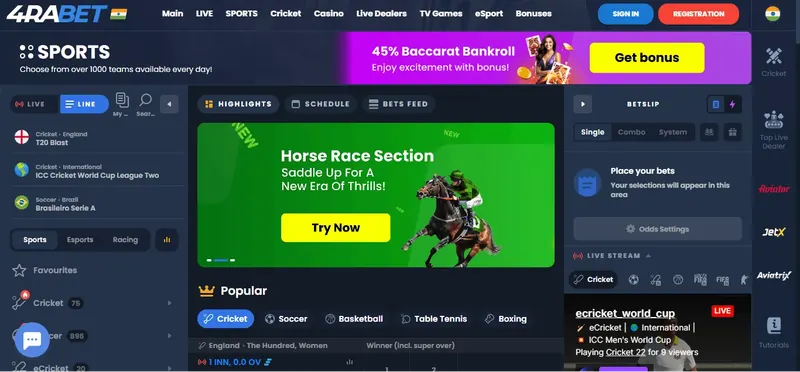
Reading Cricket Market Names
| Selection Type | Result Measured | Settlement Detail |
|---|---|---|
| Match winner | The outcome of the match as defined | What happens after a tie, Super Over or abandonment |
| Innings total | How much the side scores in that innings | Whether the innings finishes or the overs are reduced |
| Runs in a Period | The team score within a specified section | Which overs the period includes |
| Individual Batter Total | Runs added to that batter’s score | Rules for not playing or leaving the field |
| Leading Run Scorer | The greatest eligible player total | Who qualifies and how ties are handled |
The list illustrates typical formats and does not show offers currently open at 4rabet. Check the operator’s wording for the exact selection before interpreting settlement.
Calculate the Return on a Single
Shows an example for a winning single. A losing selection pays ₹0. Check the terms for voids or deductions.Working Out the Required Rate in a Chase
With 61 runs needed off 42 valid balls, the innings has seven overs left. The required rate is 61 ÷ 7, or about 8.71. If the team scores 10 during the following over, it then needs 51 from 36, which means 8.50 per over. Rates change ball by ball. The available wickets and batters give context beyond the numbers.
A chase rate describes what the batting side still needs. It does not give its chance of victory. Consider two sides that need the same runs off the same balls. The pitch, bowlers and wickets can make their situations very different. A rate projection alone is not a forecasting model.
What the Toss and Confirmed Teams Can Tell You
Winning the toss can affect who bats first. Its value depends on team choices and conditions. The confirmed playing XI is more informative than an outdated squad image. Check season, competition and fixture. Similarly named or reserve teams can appear in domestic and international schedules.
In the IPL and other competitions, check the applicable policies on replacements, phases of the innings and ties. Policies can differ between domestic and international matches. Use the tournament’s official calendar for dates and local start times. This page does not maintain a fixture list.
Shortened Matches and the Rules for Settlement
When rain reduces a limited-overs match, the playing conditions can produce a new target. Use the official number rather than extrapolating from run rates, or scaling the original target by the share of overs left. The wickets and resources still available can affect the calculation.
The scoreboard can declare a winner while the terms void a total market because too few overs were played. Keep the market definition and accepted selection. Before treating a match result as a financial settlement, read what the offer says about a tie, reduced overs or abandonment.
How to Read a Delayed Live Feed
Keep in mind that scores and video can reach you after the event. Markets may stop accepting selections while someone checks a wicket, boundary or review. A ball graphic may not be actual footage. Confirm the time and match state rather than assuming the display is live.
Our guide to sports markets explains pricing and accepted selections. For the separate rules on real-money access, read the guide to Indian law . To understand cricket artwork on instant games, use the casino game guide. A stadium, player or bat in the picture cannot turn that game into an IPL selection. The game category determines how to read the numbers.
Common Questions About Cricket Markets
How should I read 14.3 on the scorecard?
It records 14 overs and three valid deliveries. With six balls per over, use 14.5 as the decimal value for calculating the run rate.
Does a wide use up a legal delivery?
Wides and no-balls are excluded from the legal-ball count. They can still change the score under the Laws.
Does a rain delay automatically cancel every selection?
The applicable market’s terms and the events in the fixture determine settlement. Different selections can be handled differently.
Can I use this guide to see which IPL markets are open?
This page explains formats and terms. Check the official schedule for current matches and read the rules for a particular selection separately.